
S. Vikram, Political Commentator
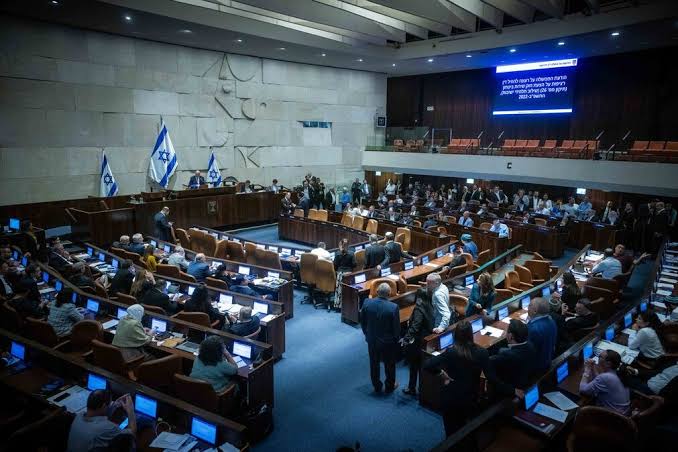
Last Monday, the Knesset passed a law making the death penalty the default punishment for Palestinians convicted of deadly attacks. The vote was 62 to 48. Within 90 days of sentencing, execution by hanging is mandated. The law applies to Palestinians in the West Bank and East Jerusalem, but not to Israeli citizens. National Security Minister Itamar Ben-Gvir celebrated with champagne while wearing a pin shaped like a hangman’s noose.
This is not a marginal adjustment to penal policy. It is a transformation of what the state is for.
Nearly half the Knesset voted against this law. They understood something fundamental: a state that abandons jurisprudence with the alibi of fighting a delinquent force is not solving its security problems. It is destroying the very thing that makes statehood meaningful.
The Asymmetry That Cannot Be Abandoned
The state is not merely one actor among many. It commands the monopoly on legitimate force. It claims to speak in the name of the whole. It receives international recognition, diplomatic immunity, access to capital markets, the standing to claim self-defense before the world. These privileges are granted on condition: the state must govern according to law. Its violence must be constrained. It must protect even those who are not its partisans.
This asymmetry between the state and non-state actors is not a weakness of the state’s position. It is the source of its legitimacy. The non-state actor can be held to no such standard. The state is different precisely because it is powerful. That power demands constraint.
When the state abandons jurisprudence—when it makes execution the default punishment, when it legislates for territory beyond its jurisdiction, when it imposes the death penalty without individualized due process—it breaks the condition on which its own existence rests.
The Alibi That Destroys
The alibi is always the same: we are fighting a delinquent force—terrorists, insurgents, enemies—and therefore we must set aside legal constraints. It appears wherever states face asymmetric conflict. And it is always a trap.
The state that adopts the methods of its enemies concedes two things. First, it cannot defeat those enemies within the law—an admission of failure. Second, it will become what it claims to oppose—an admission of moral equivalence. The state that tortures is no longer fighting torturers. The state that imposes collective punishment has adopted the logic of those who target civilians. The state that legislates the death penalty by parliamentary vote, without trial, is no longer a state under law. It is a regime of vengeance with a legislative rubber stamp.
This alibi does not solve security problems. It creates deeper ones. It teaches enemies that there is no difference between the state and the forces it opposes. It teaches citizens that law is merely a tool of power. It teaches the world that the state’s claim to democracy, to legality, to membership in the community of nations, is no longer credible.
The Prisoner and the Principle
A prisoner is entirely at the state’s mercy. They cannot defend themselves. They cannot flee. They depend on the state for food, water, shelter, medical care, and ultimately for their life. The state’s obligation to protect them is not diminished by the crime they are accused of. It is heightened by their vulnerability.
This is not sentimentality. It is the foundational premise of legal order. The state that kills those in its custody is not exercising the legitimate force that defines sovereignty. It is abusing the monopoly that sovereignty grants. The prisoner is not outside the state’s protection. They are in a position of heightened vulnerability that demands heightened protection.
The new law makes execution the default. Life imprisonment is an exception available only under “special circumstances.” This inverts the presumption of innocence. It treats conviction as a formality rather than the sacred threshold it must be. The irreversibility of the punishment demands the irrevocability of conviction. When a legal system abandons this correspondence, it ceases to be a system of law and becomes a system of state violence wearing legal clothing.
Jurisdiction Without Sovereignty
The law applies to Palestinians in the West Bank and East Jerusalem—occupied territories under international law. The Knesset does not have legal sovereignty over these areas. The Fourth Geneva Convention prohibits an occupying power from imposing its own criminal laws on the occupied population. The International Court of Justice affirmed in 2004 that the convention applies to the Occupied Palestinian Territory.
A state that legislates for territory where it does not have sovereignty is not expanding its authority. It is demonstrating that sovereignty, for it, means nothing more than the capacity to impose force. It is declaring that law is whatever it says it is, regardless of the legal order that makes statehood possible.
The Minority That Cannot Escape
Sixty-two members of the Knesset voted for this law. Forty-eight voted against. In a parliamentary system, the minority is bound by the majority’s decision, even when that decision crosses a fundamental moral threshold. They cannot escape the burden of what their body has done.
This is a structural injustice of majoritarian democracy when it is used to pass laws that violate basic principles of justice. The 48 are not opponents of Israel. They are defenders of the idea that Israel can be a state under law, a democracy, a member of the community of nations. Their votes deserve to be remembered. They deserve to be named.
What the World Owes
The international responses so far—the UN Human Rights Office calling the law a violation of the prohibition on racial segregation and apartheid, the EU calling it a grave step backward, the joint statement of deep concern from the UK, France, Germany, Italy, and Australia—are acknowledgments. But acknowledgments without action are a form of complicity.
The United States declined to criticize the law, stating it “respects Israel’s sovereign right to determine its own laws.” But sovereignty is not a blank check. It is earned through adherence to the principles that make statehood possible. The state that abandons those principles cannot claim the privileges of sovereignty.
The moral burden does not fall only on those who voted for the law. It falls on every government that declines to act. It falls on every public that does not demand accountability. It falls on every legal system that continues to recognize the authority of a court system that will now be required to impose death sentences as a default.
The State That Abandons Itself
The state that abandons jurisprudence is not becoming stronger. It is hollowing itself out. It retains the outward forms of statehood—the flag, the seat at the United Nations, the military, the currency—but it has abandoned the substance that makes those forms meaningful.
Domestically, citizens lose faith. They see that law does not constrain power. They understand that what can be done to the prisoner today can be done to them tomorrow. Consent turns to coercion. The state must rely increasingly on force to maintain order, because it has abandoned the legitimacy that made force unnecessary.
Internationally, recognition erodes. Sanctions, arms embargoes, diplomatic isolation, the suspension of trade agreements—these are not punishments imposed by a hostile world. They are the natural consequences of a state that has ceased to be what it claimed to be.
The prisoners are the immediate victims. The 48 who voted against are the internal witnesses. But the deepest victim is the idea of law itself—the idea that human beings can organize their collective life through rules that bind even the powerful, that protect even the despised, that hold even the state accountable.
That idea is what is being legislated into irrelevance. And that is the greatest loss—not only for Israel, not only for the Palestinians, but for anyone who believes that law can be something more than the will of the stronger.